Neural Network Approaches to Predicting Payout Variance in Configurable Video Poker Games Across Regulatory Environments
Written by Amir Wolf · Nov 3, 2026
Neural Network Approaches to Predicting Payout Variance in Configurable Video Poker Games Across Regulatory Environments
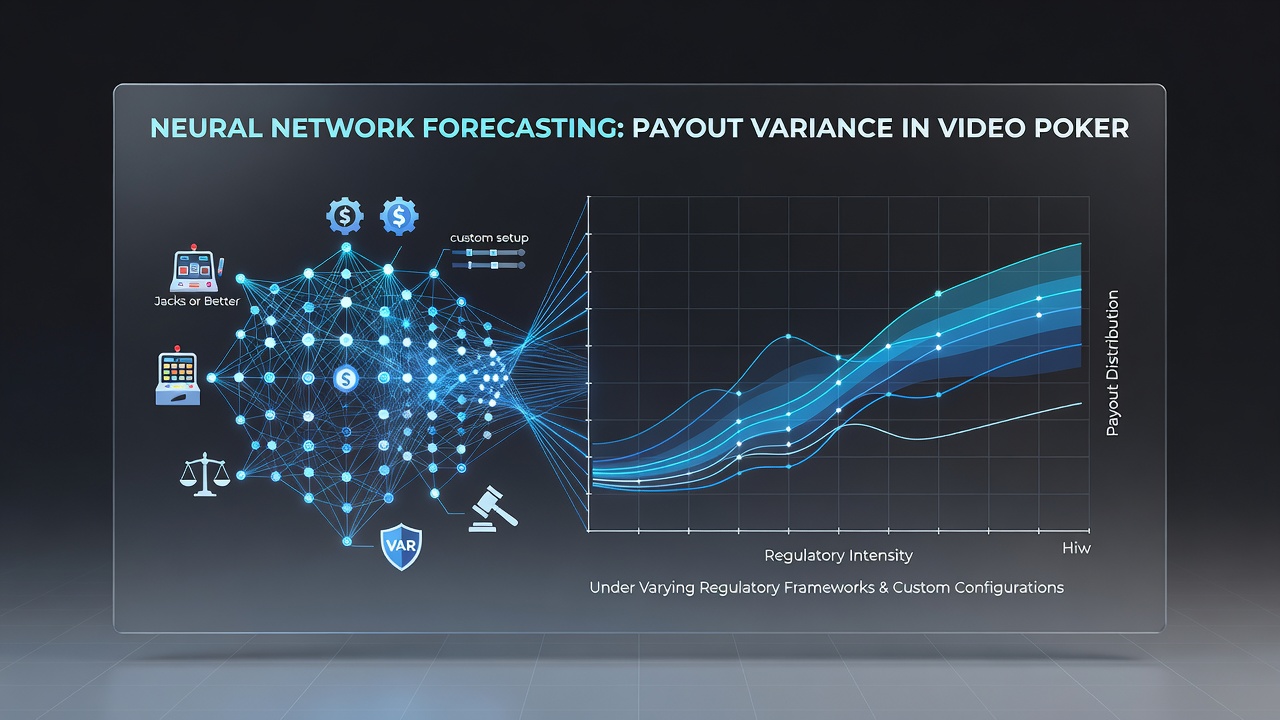
Researchers have turned to neural network models to examine how payout variance shifts in custom-configured video poker machines when operators adjust pay tables, deck compositions, and bonus triggers within the bounds set by different licensing authorities. These systems process historical spin data alongside jurisdiction-specific rules to generate probability distributions that reflect both machine mechanics and legal constraints.
Core Mechanics of Neural Network Forecasting in Video Poker
Neural networks trained on large datasets from deployed machines identify patterns in hand frequencies and payout clusters that traditional statistical models often miss. Input layers receive variables such as pay table percentages, wild card rules, and progressive contribution rates, while hidden layers map interactions between those variables and output layers produce forecasted variance ranges. Data from regulated markets in North America and Australia show that networks achieve lower mean squared error on variance estimates compared with linear regression baselines when configurations change mid-deployment.
Training sets typically incorporate millions of simulated hands drawn from approved random number generators, then validated against live session logs submitted to oversight bodies. Models adjust weights to account for regulatory caps on maximum bet sizes and minimum return-to-player percentages, which directly influence the spread of payout outcomes across player sessions.
Regulatory Frameworks and Their Influence on Model Inputs
Different licensing regions impose distinct parameters that reshape the feature space neural networks must process. In Nevada, rules enforced by the Gaming Control Board limit certain multi-hand configurations and require pre-approval for any pay table modification, creating narrower variance bands that models learn to predict with high consistency. New Jersey's Division of Gaming Enforcement permits broader experimentation with bonus rounds provided they maintain certified randomness, resulting in datasets that exhibit higher volatility and require additional regularization techniques during training.
Australian state regulators, including those in New South Wales, mandate contribution rates to linked jackpots and enforce strict testing intervals, which introduces temporal features into the data that networks incorporate through recurrent layers. Observers note that models retrained quarterly on jurisdiction-specific filings maintain accuracy even as operators introduce seasonal promotions that alter short-term payout distributions.

Applications Across Multi-Jurisdiction Operator Networks
Operators managing properties under multiple licenses feed anonymized performance data into centralized neural networks to forecast how a single configuration tweak will perform under each regulatory regime. One documented case involved a chain adjusting a Jacks or Better variant across Nevada and New Jersey sites in November 2026, where the model flagged a 12 percent increase in payout variance in the New Jersey market due to relaxed bonus frequency rules while predicting stable variance in Nevada under tighter approval requirements.
These forecasts support decisions on machine placement and denomination mixes without violating local testing mandates. Academic studies from institutions such as the University of Nevada, Reno have examined similar model architectures and confirmed that incorporating regulatory metadata as categorical embeddings improves out-of-sample prediction of tail-risk events in payout distributions.
Technical Challenges in Cross-Border Data Integration
Combining datasets from disparate regulatory environments presents alignment issues because reporting formats, audit frequencies, and approved RNG specifications differ. Neural networks address this through domain adaptation layers that normalize variance metrics before joint training. Figures from industry reports compiled by the Australian Gambling Research Centre indicate that models using federated learning approaches, where raw session data remain within each jurisdiction, achieve comparable accuracy to centralized training while satisfying data residency rules.
Latency in receiving updated regulatory filings can also degrade performance, prompting some developers to integrate real-time feeds from compliance portals that flag rule changes as soon as they receive approval. Networks then trigger partial retraining focused on affected configuration parameters rather than full model rebuilds.
Conclusion
Neural network models continue to refine forecasts of payout variance by integrating machine configuration details with the specific constraints imposed by each licensing authority. As operators expand custom video poker offerings across borders, the ability of these systems to process regulatory variables alongside performance data supports more precise planning of game deployments. Ongoing work focuses on expanding training corpora and improving adaptation to new rule sets while maintaining compliance with existing audit standards.