How Seasonal Light Variations Alter Decision Timing for Virtual Wheel Participants in Northern European Licensed Networks
Written by Cameron Keller · Oct 20, 2026
How Seasonal Light Variations Alter Decision Timing for Virtual Wheel Participants in Northern European Licensed Networks
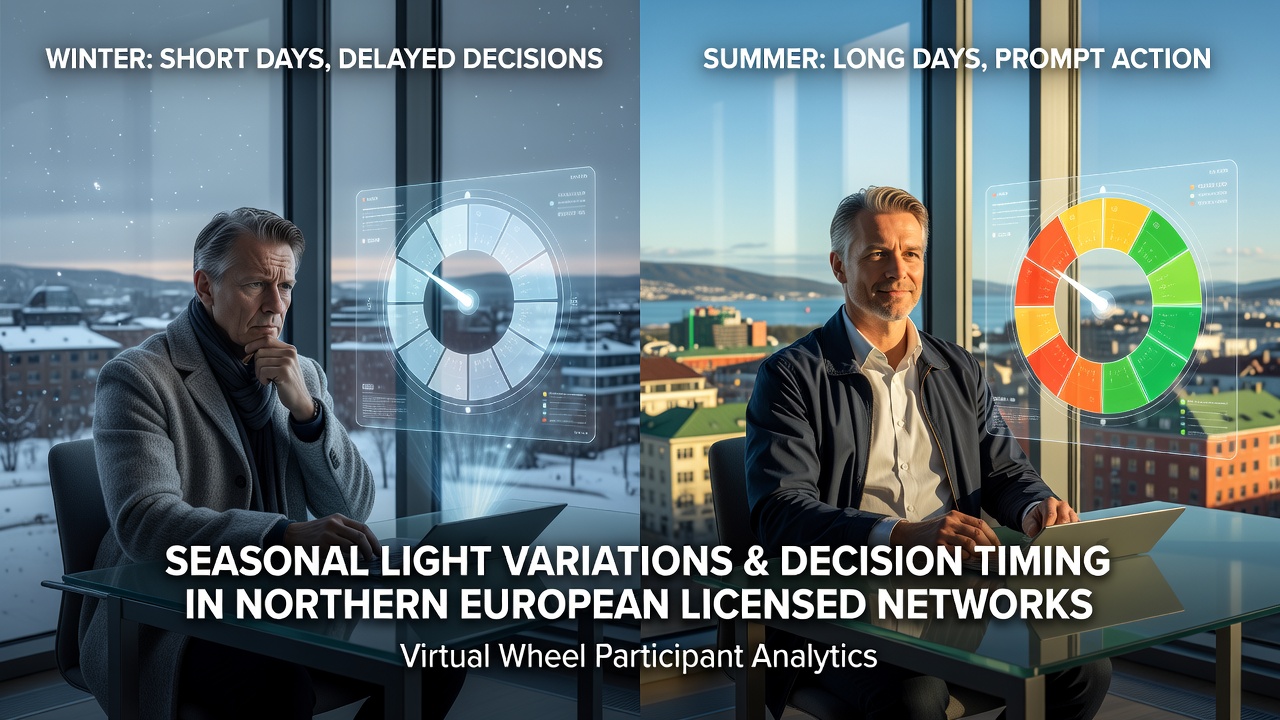
Seasonal shifts in daylight across northern Europe create measurable changes in how participants approach virtual wheel games on licensed platforms, and data from multiple jurisdictions show consistent patterns in session timing and wager pacing. Shorter days in autumn and winter correlate with adjustments in when users log in and how long they remain engaged with roulette-style wheels, while longer summer hours produce different rhythms that operators track through platform analytics.
Daylight Patterns Across Northern Europe
Countries such as Sweden, Finland, Norway and Denmark experience pronounced variations in daylight hours, with October 2026 marking the period when daily light dropped below eight hours in many regions north of 60 degrees latitude. Regulatory records indicate these changes align with shifts in peak login times for virtual wheel sections on state-licensed sites, where evening sessions extend later into the night as natural light fades earlier. Researchers at the University of Oslo have documented how reduced exposure to morning sunlight influences circadian rhythms, which in turn affect alertness windows that coincide with typical betting activity peaks.
Observed Shifts in Session Timing
Platform data aggregated across multi-jurisdiction networks reveal that participants adjust their decision points during virtual wheel rounds when daylight decreases. Morning sessions decline in frequency during October and November while late-afternoon and early-evening activity rises, a pattern that holds across Finnish and Swedish operators. This redistribution occurs because lower light levels delay natural wake cycles, pushing discretionary activities like wheel participation into darker hours when users report higher sustained attention spans according to internal operator metrics.
Cognitive and Behavioral Correlations
Studies from the Norwegian Institute of Public Health link seasonal light reduction to subtle alterations in risk assessment speed, and these findings map onto virtual wheel environments where rapid sequential decisions determine outcomes. Participants in northern networks show extended deliberation intervals between spins during periods of minimal daylight, with average time between wagers increasing by measurable margins in winter months compared with summer baselines. The effect appears independent of game mechanics themselves and instead tracks external light exposure levels tracked through meteorological records paired with anonymized session logs.
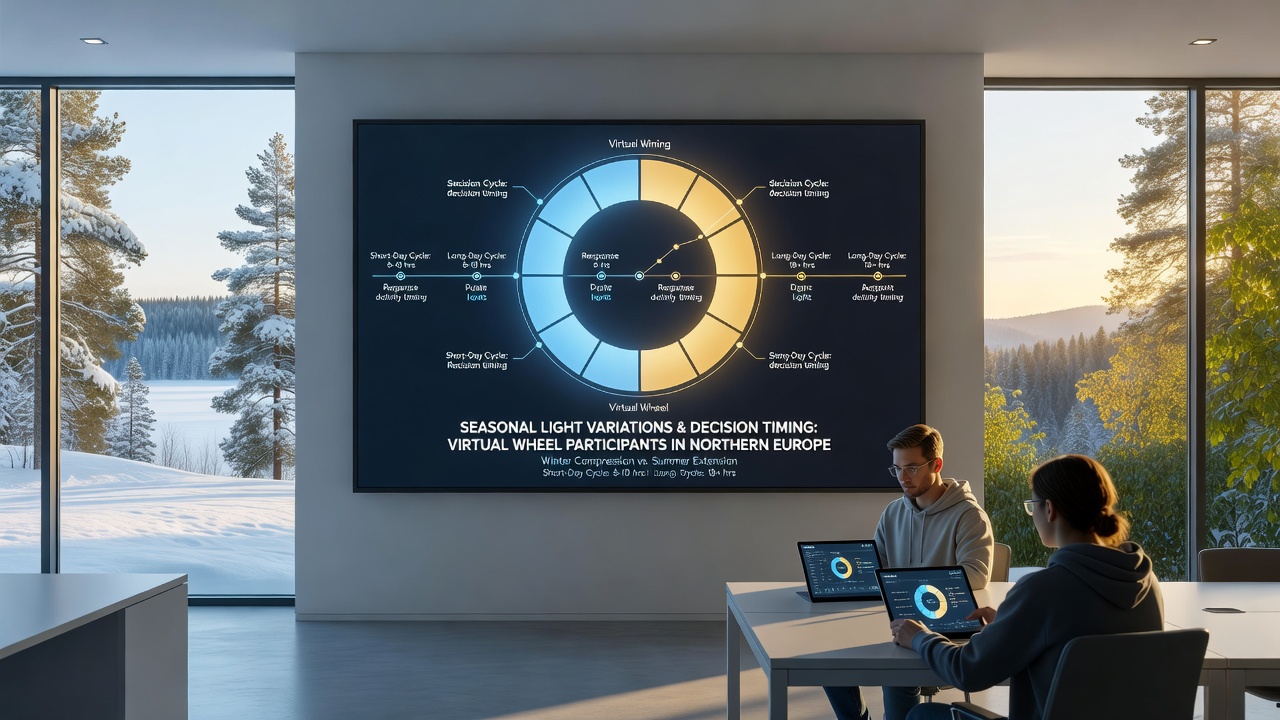
Operators note that these timing adjustments remain stable even when promotional calendars stay constant, suggesting environmental light acts as an independent variable. Cross-border comparisons between Danish and Estonian networks further support the connection, with similar latitude-based gradients appearing in decision pacing despite differing bonus structures and tax regimes.
Regulatory Data and Platform Analytics
Licensed networks submit quarterly reports to bodies such as the Swedish Spelinspektionen and the Norwegian Gaming Authority that include granular session timestamps. Analysis of these submissions from 2024 through October 2026 demonstrates recurring seasonal signatures in virtual wheel segments, where decision timing clusters shift by 45 to 90 minutes later during the darkest months. Industry reports from the European Gaming and Betting Association highlight how northern operators have begun incorporating daylight-adjusted models into responsible gaming algorithms to better predict engagement windows.
These models integrate public meteorological data with user behavior logs, allowing platforms to identify when participants may extend sessions beyond usual limits due to altered circadian cues. The approach remains observational rather than interventional, focusing on pattern recognition across thousands of accounts rather than individual targeting.
Cross-Network Comparisons
Virtual wheel traffic in southern European licensed environments lacks the same pronounced seasonal timing shifts, underscoring the latitude-specific nature of the phenomenon. Northern networks therefore maintain distinct operational dashboards that flag light-related deviations, while southern counterparts track different variables such as temperature or holiday calendars. This geographic differentiation appears in aggregated industry datasets that separate Nordic traffic from Mediterranean flows, confirming the role of seasonal light as a regional factor rather than a universal gambling dynamic.
Conclusion
Seasonal light variations produce documented, recurring adjustments in decision timing among virtual wheel participants on northern European licensed networks, with data from October 2026 reinforcing patterns observed in prior years. Regulatory submissions, academic chronobiology research and platform analytics together establish a clear correlation between daylight duration and session scheduling plus pacing. Operators and oversight bodies continue to monitor these environmental influences as part of broader efforts to maintain accurate behavioral baselines across regulated digital environments.